

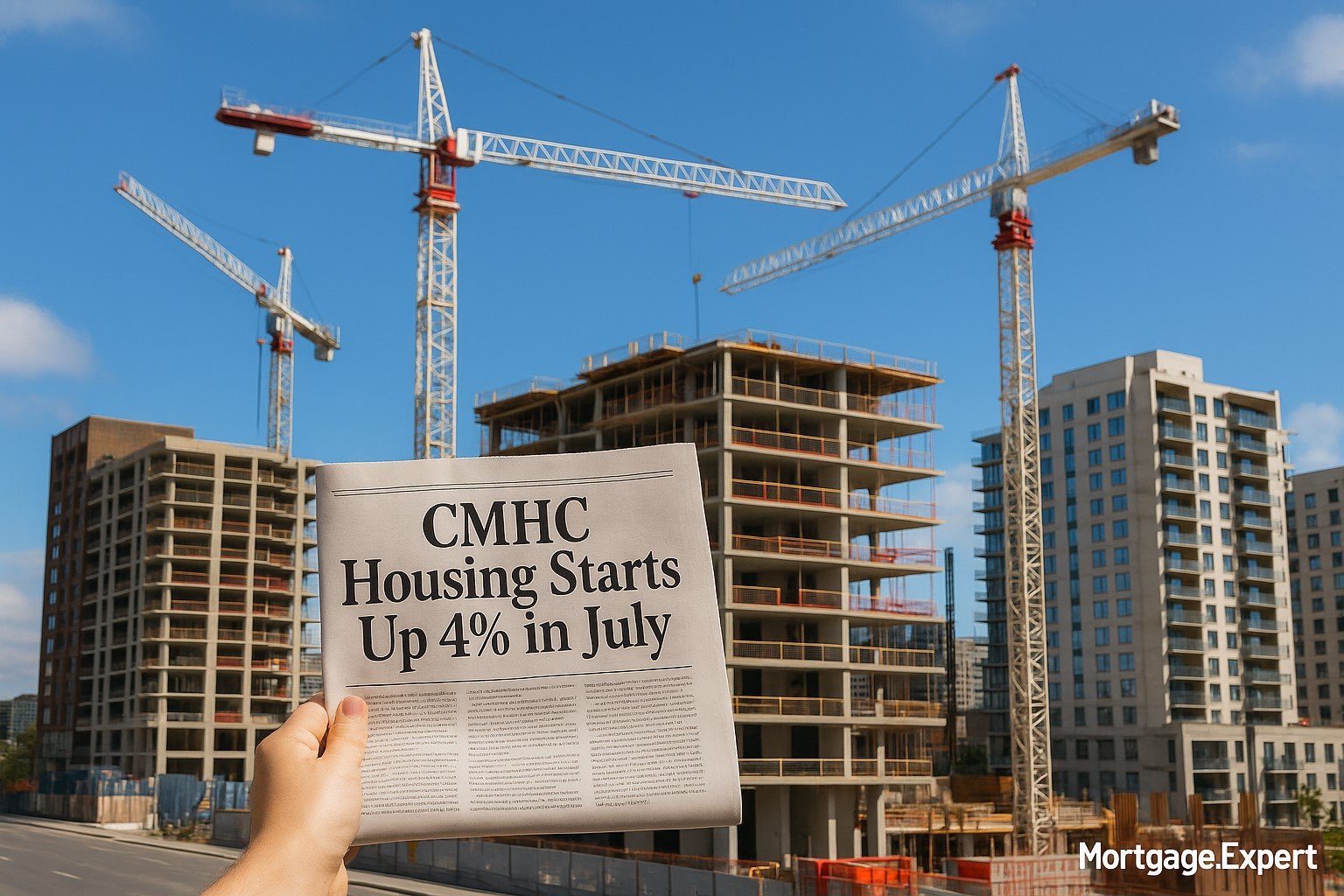

Canadian Housing Starts Rose 4% in July, CMHC Reports
Canada’s housing market showed signs of resilience in July, with CMHC reporting a 4% rise in the pace of housing starts. The increase, led by urban multi-unit projects, suggests continued builder confidence despite affordability challenges.
Canada’s housing market received a rare bit of positive news in July. According to the Canada Mortgage and Housing Corporation (CMHC), the annual pace of housing starts climbed 4% month-over-month, rising to 294,085 units from 283,523 units in June.
For homeowners, buyers, and mortgage professionals alike, this uptick is more than just a statistic. It reflects the balancing act between persistent affordability challenges, high interest rates, and a still-urgent demand for housing across Canada.
The Numbers at a Glance
The seasonally adjusted annual rate (SAAR) of housing starts is a key measure of how many new homes are being built, adjusted for seasonal fluctuations. July’s reading of 294,085 units represents:
- A 4% increase over June’s 283,523.
- One of the strongest monthly growth rates in 2025 so far.
- A sign that builders are pushing ahead despite labour shortages and elevated material costs.
CMHC noted that the increase was driven by multi-unit projects in urban centres, particularly condos and apartments, reflecting developers’ preference for higher-density housing.
Why It Matters for Mortgages
Housing starts don’t just affect builders and investors. They ripple through the entire housing ecosystem, including mortgages. Here’s how:
- More Supply, Potentially Lower Pressure on Prices
- New builds increase available housing stock, which could help moderate price growth in overheated urban markets.
- If prices stabilize, mortgage affordability may improve slightly for first-time buyers.
- Higher Construction Loans and Financing Demand
- More projects mean more demand for construction financing and bridge loans.
- Lenders may see increased activity from builders seeking capital.
- Mortgage Market Impacts
- A pickup in housing starts often correlates with future mortgage originations, as these units are completed and enter the resale or rental markets.
Regional Highlights
CMHC data showed uneven growth across Canada:
- Toronto & Vancouver: Both markets saw significant gains in multi-unit construction, especially condominiums. These regions remain magnets for population growth, including immigration.
- Prairies (Calgary, Edmonton, Winnipeg): Starts were flat, as affordability remains relatively better, but builders are cautious due to oversupply concerns in some segments.
- Atlantic Canada: Halifax and surrounding areas posted modest increases, supported by strong migration trends.
- Quebec: Montreal saw steady growth, with rental apartments driving activity.
This regional breakdown underscores that housing starts are highly sensitive to local demand conditions and financing availability.
Broader Economic Context
The increase in housing starts comes against a backdrop of:
- High borrowing costs: Mortgage rates remain in the 4.5%–5.5% range for most fixed products.
- Population growth: Canada welcomed over 1 million newcomers in the past year, keeping housing demand robust.
- Supply shortages: Despite the uptick, housing supply still lags far behind demographic demand, with some experts saying Canada needs at least 5.8 million new homes by 2030 to restore affordability.
Economists caution that while July’s numbers are encouraging, they don’t yet mark a full turnaround. Persistent cost pressures and skilled labour shortages continue to challenge builders.
Expert Views
- Market Analysts: See the July data as evidence that developers are cautiously optimistic. “Even with high rates, the demand story is too strong to ignore,” one economist told Global News.
- Mortgage Brokers: Stress that for buyers, new housing supply could open up more opportunities — but affordability will remain tight unless borrowing costs ease.
- Policy Advocates: Argue that government support, such as tax credits for rental construction and accelerated permitting, will be needed to sustain momentum.
Tips for Buyers and Homeowners
If you’re navigating the mortgage market while housing starts rise, here’s what to keep in mind:
- First-Time Buyers: Keep an eye on pre-construction projects. More units could mean more competitive pricing and incentives from developers.
- Renewals: Even with more supply, rates are still elevated. Shop around early and consider variable options if you can handle some rate risk.
- Investors: Rental-focused construction means opportunities in urban multi-family segments, but financing costs remain a hurdle.
Why This News Matters
For Canadians, July’s increase in housing starts is a double-edged sword. On one hand, it signals builders’ confidence and potential relief for housing supply. On the other, the challenges of affordability and financing remain pressing. Mortgage borrowers should see this as a reminder that while more homes may be on the way, smart financial planning is still essential in a high-rate environment.
July’s numbers may not solve Canada’s housing crisis overnight, but they highlight a critical truth: even in the face of high borrowing costs, the push to build more homes continues. For homeowners and buyers, the next few years will be about balancing opportunity with careful financial choices.

Clara Desai
Articles: 545Related Posts



Stuck with a Mortgage Decision?
Don’t stress — our team is here to help. Reach out for free, no-obligation guidance.
Contact the Experts