

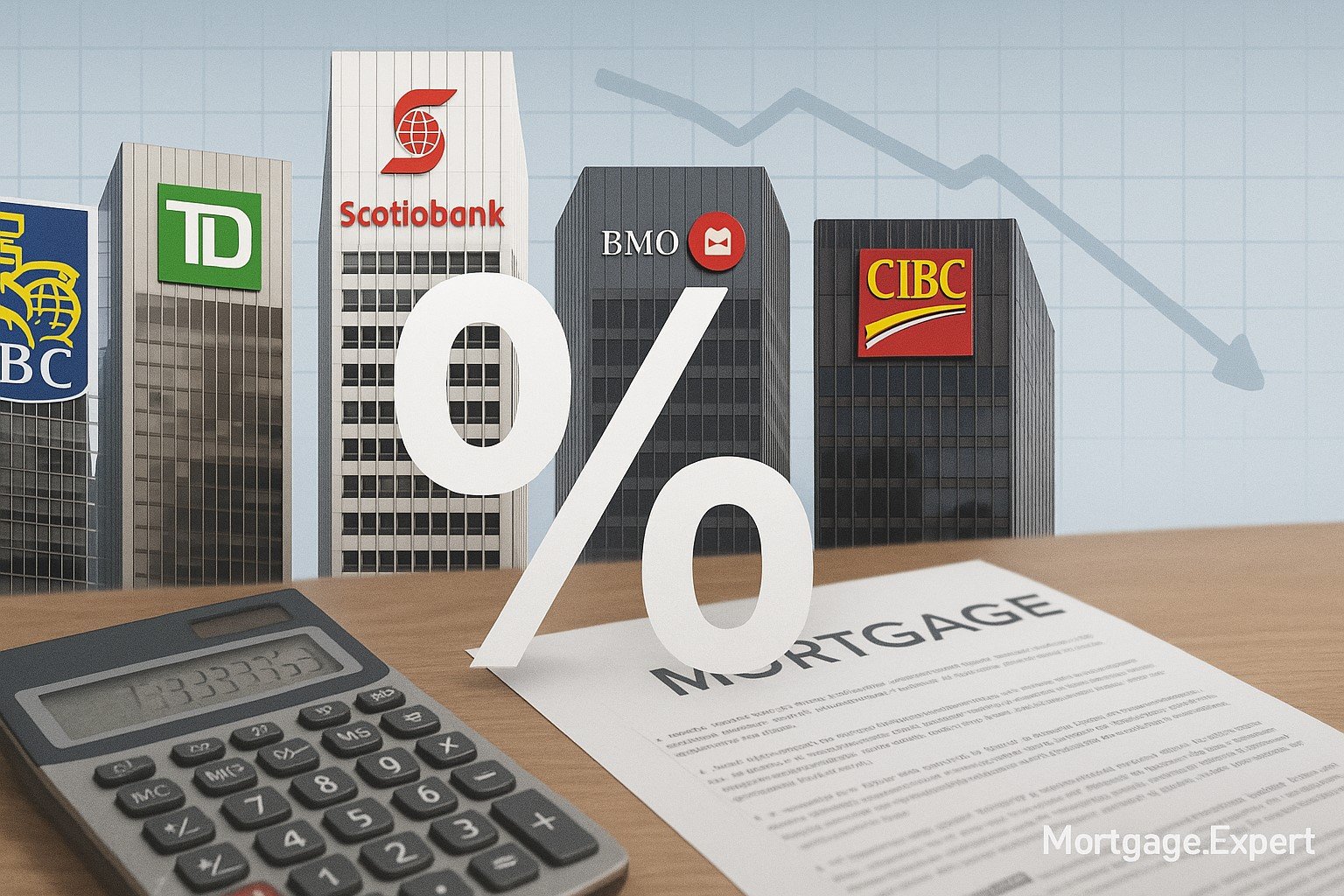

Big Six Banks Cut Prime Rate by 25 bps Following Bank of Canada Move
Canada’s Big Six banks reduce prime rate to 4.45% after BoC’s 25 bps cut — lowering costs for variable mortgages and credit lines.
Toronto | October 31, 2025 — Canada’s six largest banks have lowered their prime lending rate to 4.45%, immediately after the Bank of Canada’s 25-basis-point cut to its overnight target rate on October 29.
This marks the first coordinated prime-rate reduction since March 2025, and extends the recent easing cycle aimed at supporting slowing economic momentum and moderating inflation pressures.
What Happened
All of the “Big Six” — RBC, TD, Scotiabank, BMO, CIBC and National Bank — announced identical 0.25-percentage-point cuts late Wednesday, bringing their posted prime rate from 4.70 to 4.45 per cent.
The move follows the central bank’s decision to lower its policy rate to 2.25% amid signs of cooling demand, weaker exports, and rising household stress.
Independent lenders, credit unions, and digital banks are expected to follow suit in the coming days, aligning their own prime rates with the big institutions.
Impact on Borrowers
For Canadians holding variable-rate mortgages or lines of credit, the cut translates into slightly lower interest costs almost immediately.
- A borrower with a $500,000 variable-rate mortgage could save roughly $100–120 per month, depending on the product and remaining amortization.
- Home-equity line of credit (HELOC) rates also move in lockstep with prime, meaning monthly interest expenses should ease for revolving borrowers.
However, the effect on fixed-rate mortgages remains less direct. Fixed pricing is tied more closely to Government of Canada bond yields and lender spreads, which fluctuate with market sentiment rather than the central bank’s overnight rate.
Industry Commentary
Analysts say the reduction is a welcome relief but not a turning point.
“It’s a modest cut, not a rescue,” noted a Toronto-based broker. “Variable borrowers will see some breathing room, but lenders remain cautious about margins and credit quality.”
Mortgage rate aggregators such as Ratehub.ca and RateSpy show early movement among lenders trimming their five-year variable rates into the 3.45–3.60% range, depending on credit profile and loan-to-value.
Market Context
The Bank of Canada’s latest statement pointed to softer GDP growth (-1.6% annualized in Q2), waning consumer spending, and slower job creation as justification for the move. Inflation remains near 2.3%, just above the 2% target, giving policymakers space to ease.
Still, economists are divided on whether this marks the final cut in the current cycle. Futures markets now price in only one additional 25-basis-point reduction by early 2026, with a prolonged “pause” thereafter.
What Borrowers Should Do
Mortgage advisors recommend reviewing:
- Rate type: Compare current fixed-rate offers with new variable discounts; switching may make sense if you can tolerate payment fluctuations.
- Amortization: Extending your amortization can offset payment stress but raises lifetime interest costs.
- Prepayment options: Use lower payments to make lump-sum contributions, reducing overall interest.
Bottom Line
The synchronized prime-rate cuts offer incremental relief to variable-rate borrowers, but not a wholesale drop in mortgage costs. Fixed-rate seekers should continue watching bond yields and lender spreads.
For most Canadians, this marks a pause for breath — not the end of the tightening hangover.
Thinking About Switching to a Variable-Rate Mortgage?
Find out how the new 4.45% prime rate could affect your payments and savings. Get a personalized analysis from a licensed broker.
Talk to a Mortgage Expert
Clara Desai
Articles: 545Related Posts



Stuck with a Mortgage Decision?
Don’t stress — our team is here to help. Reach out for free, no-obligation guidance.
Contact the Experts