

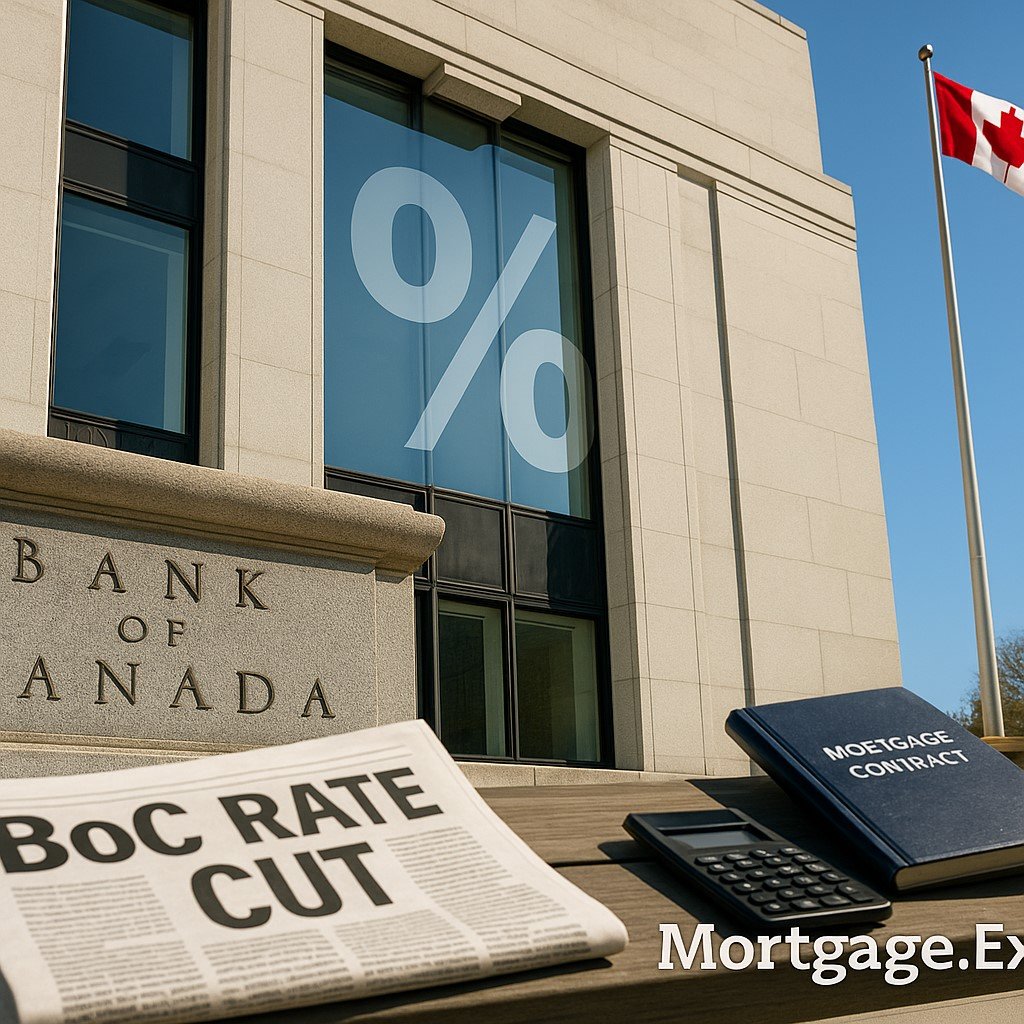

Bank of Canada Poised to Cut Rates on September Amid Weak Jobs and Economy
The Bank of Canada is expected to lower its policy rate by 25 basis points on September 17, 2025. Economists cite weak jobs data, shrinking GDP, and cooling inflation. Mortgage holders could see relief, especially those with variable rates.
Canada’s housing and mortgage market could be set for relief this week. Economists widely expect the Bank of Canada (BoC) to lower its key interest rate by 25 basis points (0.25%) at its next policy meeting . This would mark another step in the central bank’s pivot toward easing, after more than two years of restrictive monetary policy.
Why the Cut is Expected
A fresh Reuters poll of economists shows near-unanimous consensus for a rate reduction. The overnight policy rate, currently at 2.75%, is expected to drop to 2.50%. Analysts also see at least one more cut before the end of 2025, signaling that borrowing costs may continue to trend lower into the new year.
The reasoning is clear:
- Weakening Labour Market: Canada lost about 65,500 jobs in August, a sharp reminder that businesses are feeling the slowdown.
- Shrinking GDP: The economy contracted in the last quarter, raising recessionary risks if borrowing costs remain high.
- Cooling Inflation: Price pressures have eased compared to 2023 peaks, giving the Bank of Canada room to loosen policy.
Impact on Borrowers and Homeowners
For mortgage holders, this decision carries immediate significance:
- Variable Rate Mortgages: These products are directly tied to the prime rate, which typically moves in step with the BoC’s policy rate. A 25 bps cut could trim monthly payments for variable-rate borrowers.
- New Buyers: Lower rates improve affordability by reducing stress test qualifying rates, opening doors for more first-time buyers.
- Renewals: Those renewing mortgages this fall could face slightly better options than earlier in 2025, particularly if further cuts follow.
Risks and Watchpoints
While optimism is high, the path forward isn’t guaranteed. Inflation, though moderating, is not fully under control. Any rebound in oil prices, global trade tensions, or supply shocks could complicate the BoC’s easing cycle.
Financial markets are also closely watching the U.S. Federal Reserve, which is navigating its own rate cut trajectory. Divergence between the two central banks could impact the Canadian dollar, trade, and broader financial conditions.
What It Means for You
If you hold a mortgage or are planning to buy in the coming months, rate cuts are generally positive news. But experts caution against rushing decisions. Fixed mortgage rates, for example, follow government bond yields more closely than the BoC rate — meaning declines may not be immediate or equal.
As September 17 approaches, the spotlight is firmly on Governor Tiff Macklem and his team. Their next move could set the tone for the housing market’s direction into 2026.
Rates may be easing—get a personalized plan in minutes
Compare fixed vs. variable, estimate payments, and see renewal options with a licensed advisor.

Clara Desai
Articles: 545Related Posts



Stuck with a Mortgage Decision?
Don’t stress — our team is here to help. Reach out for free, no-obligation guidance.
Contact the Experts