

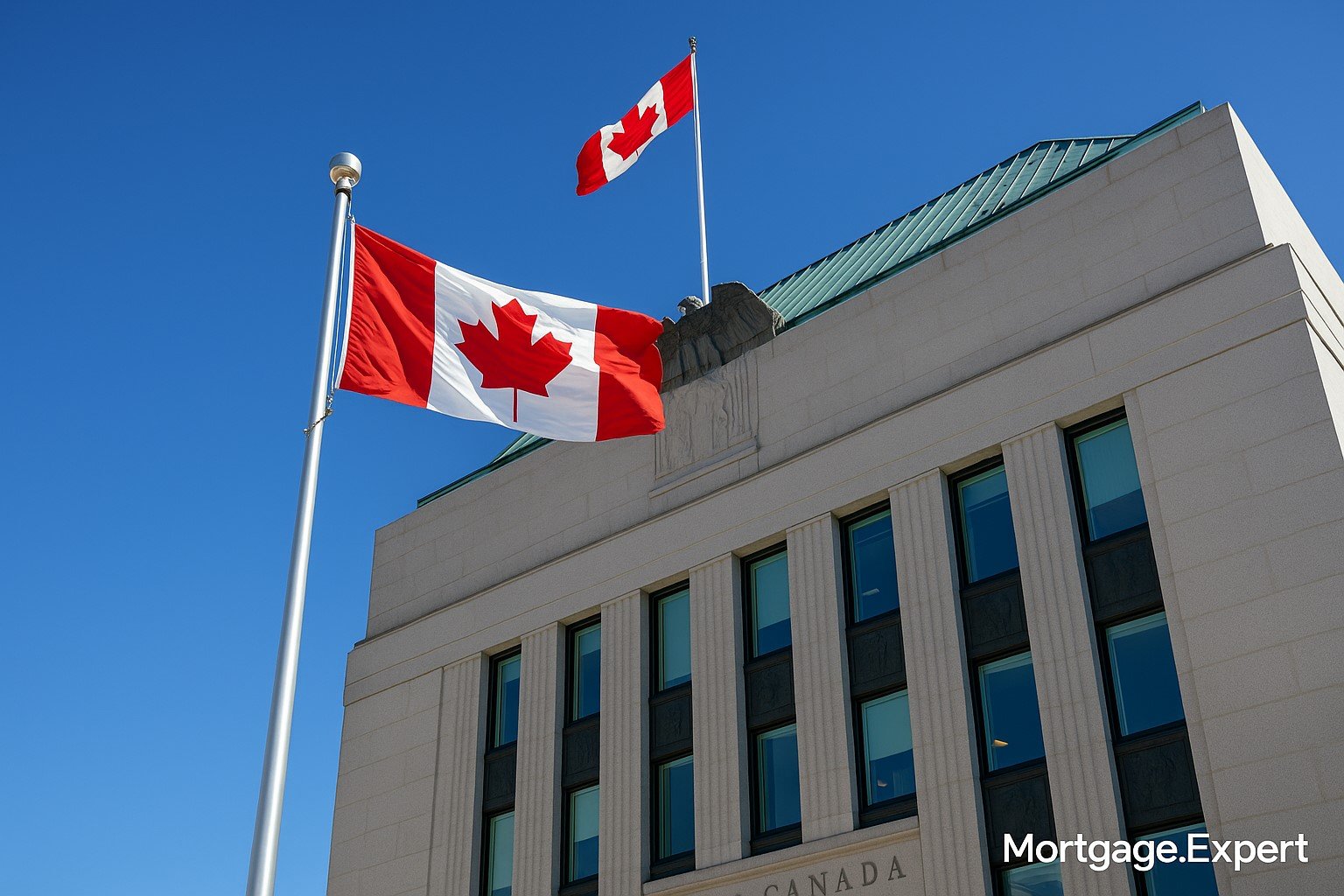

Bank of Canada Reaffirms 2% Inflation Target, What It Means for Mortgages
Bank of Canada Governor Tiff Macklem confirmed that the 2% inflation target will remain in place through 2026. For Canadian homeowners, this signals stability in mortgage rates and predictability in renewals.
Stability in Uncertain Times
The Bank of Canada (BoC) has made it clear: its long-standing 2% inflation target will remain intact through the 2026 policy review. Governor Tiff Macklem reiterated this in a recent speech, noting that the inflation-control framework has been critical for economic stability over the last three decades.
For Canadian households, this commitment carries major weight. Inflation targeting is not just about abstract numbers; it directly shapes the path of interest rates, mortgage affordability, and ultimately the real estate market. With housing costs still high and many borrowers facing renewals, predictability is welcome news.
Why the 2% Target Matters
- Anchor for Expectations
Inflation targets act as a compass for businesses, consumers, and investors. When the central bank keeps inflation close to 2%, it gives confidence that the value of money won’t erode unexpectedly. For borrowers, this stabilizes interest rate projections. - Impact on Mortgages
Mortgage rates are closely tied to the BoC’s policy stance. If the target were raised (say to 3%), it could signal tolerance for higher inflation—translating to higher long-term borrowing costs. By holding firm at 2%, the BoC is sending a message that it will remain vigilant, keeping rate hikes in check when possible. - Global Comparisons
Most advanced economies, including the U.S. Federal Reserve and the European Central Bank, also target around 2%. Deviating from this standard would risk undermining Canada’s credibility in financial markets.
The Current Interest Rate Environment
The Bank’s key overnight rate currently stands at 2.75%, where it has been held steady for three consecutive meetings. This follows a period of easing earlier in 2025, as inflation moderated from pandemic-era highs.
- Fixed-Rate Borrowers
Many Canadians who locked in 5-year fixed mortgages in 2020–21 at ultra-low rates are now preparing for renewals. The 2% inflation target makes it less likely that rates will spiral upward, offering some comfort. - Variable-Rate Borrowers
For homeowners on variable mortgages, the BoC’s steady hand means more predictability in monthly payments. Instead of frequent rate shocks, stability reduces volatility in household budgeting.
Pressures on the Economy
Despite the reassuring stance, the Canadian economy is not without challenges.
- Trade Uncertainty: Rising U.S. tariffs under shifting political winds are straining Canadian exporters, adding inflationary risks via higher import costs.
- Supply Chain Disruptions: Global shipping costs have risen again, reviving concerns about imported inflation.
- Housing Affordability: While home prices have cooled in Toronto and Vancouver, affordability remains stretched. Many first-time buyers are still priced out, and rental markets are tightening.
The BoC acknowledges these pressures but argues that consistency in monetary policy is the best way to ride out turbulence.
What This Means for Homeowners
- Renewals
Mortgage renewals remain one of the biggest pain points. Estimates suggest that nearly 50% of fixed-rate mortgages will come due between 2025 and 2027. With current 5-year fixed rates in the 4.5–5.2% range, many households face payment increases of 10–20%. While the BoC can’t prevent these increases, a stable inflation target reduces the risk of sudden further hikes. - New Buyers
For Canadians entering the housing market, clarity on the inflation target provides more certainty when deciding between fixed and variable products. Lenders price their products partly based on inflation expectations—if those expectations are anchored, borrowing costs are easier to forecast. - Investors and Builders
Developers and real estate investors rely on long-term financing. With inflation control affirmed, long-term bonds are less volatile, lowering financing risk for new housing supply.
The Broader Mortgage Market
Canada’s mortgage market has already been adapting to these realities:
- Stress Tests: The Office of the Superintendent of Financial Institutions (OSFI) continues to enforce a stress test requiring borrowers to qualify at the higher of 5.25% or +2% above the contract rate. This ensures households can withstand potential payment shocks.
- Alternative Lenders: With the big banks staying cautious, more borrowers are turning to credit unions and private lenders, especially in Ontario and B.C.
- Arrears Still Low: Despite renewal shocks, mortgage arrears remain below 0.2% nationwide, showing remarkable resilience.
Strategic Takeaways
- For Borrowers: If you’re approaching renewal, consider early refinancing to lock in before possible global shocks drive rates up again. Stability does not mean rates will fall quickly—it simply lowers the risk of sudden hikes.
- For Buyers: Budget conservatively. Even with stable policy, affordability remains tight in major cities. Look at smaller markets, where price cooling has been more pronounced.
- For Policymakers: The BoC’s stance supports credibility, but housing affordability requires broader supply-side solutions, not just monetary stability.
Looking Ahead
The next key milestone will be the 2026 joint review between the Bank of Canada and the Department of Finance. While Governor Macklem has closed the door on changing the target, the review may still include tweaks to communication strategies or balance sheet policies.
In the meantime, Canadian households can take a small sigh of relief: inflation may remain sticky in certain sectors, but the BoC is not moving the goalposts.
By reaffirming the 2% inflation target, the Bank of Canada has given homeowners, buyers, and lenders a clear signal: stability comes first. While challenges like U.S. tariffs, global supply costs, and renewal shocks persist, the message is that Canada’s monetary policy will remain predictable.
For borrowers navigating renewals, investors weighing new projects, and families eyeing their first homes, this consistency is invaluable.
Have questions about your mortgage?
Get clear, personalized advice on renewals, refinances, or a first purchase—no jargon, just answers.
Talk to a Mortgage Expert →

Clara Desai
Articles: 545Related Posts



Stuck with a Mortgage Decision?
Don’t stress — our team is here to help. Reach out for free, no-obligation guidance.
Contact the Experts