

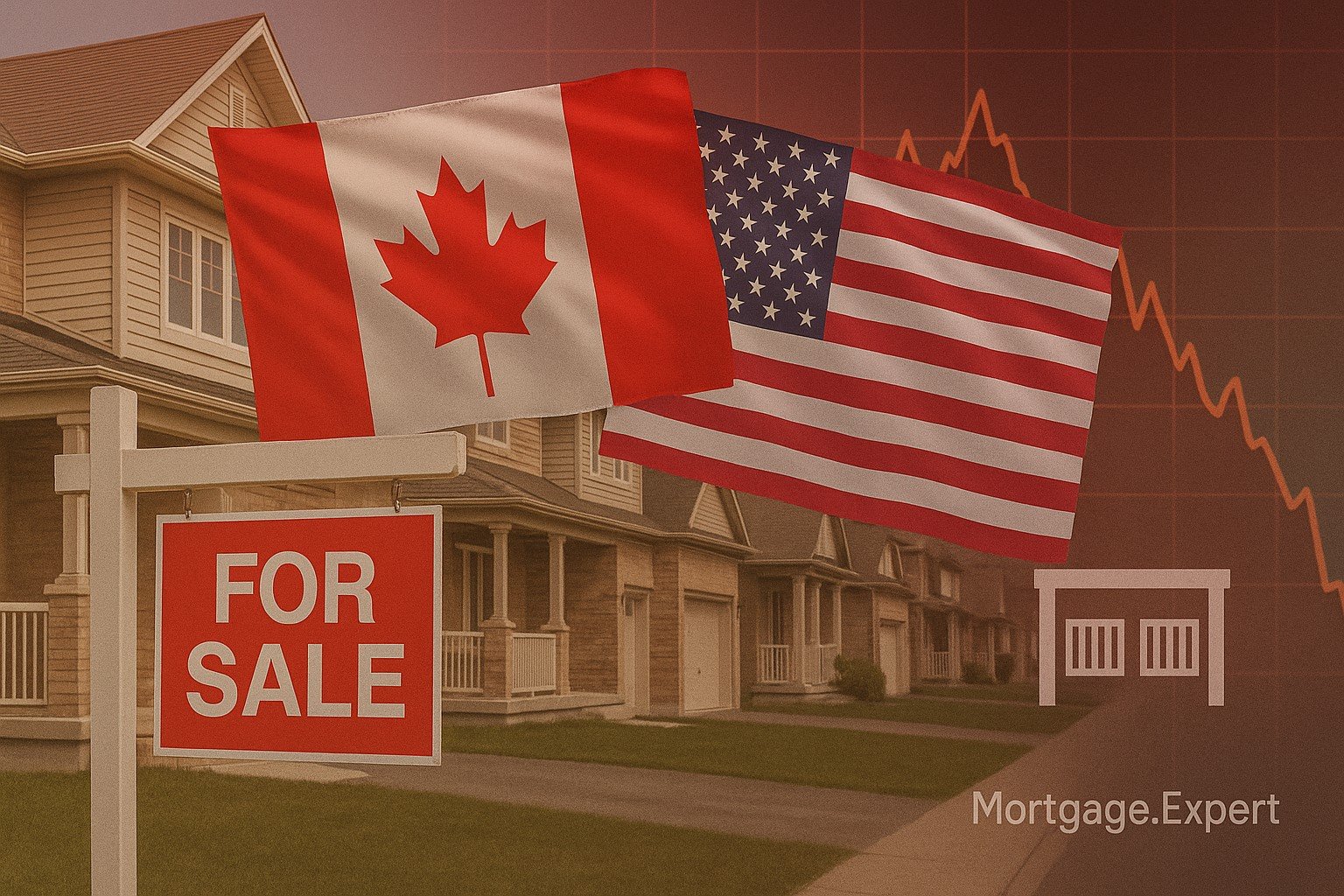

Trump’s Tariffs Add New Uncertainty to Canada’s Housing Outlook
Canada’s housing market faces new challenges as U.S. tariffs escalate. Analysts warn the trade shock could dampen mortgage demand, delay rate relief, and increase risk aversion among lenders.
Ottawa | October 28, 2025, 15:00 IST — Filed via Mortgage Professional Reports
Canada’s housing market, already navigating high borrowing costs and slowing affordability, faces a new headwind: escalating U.S. trade tariffs announced by Donald Trump. Analysts warn the move could create fresh uncertainty for Canada’s economy, potentially weighing on housing demand, investor sentiment, and the path of mortgage rates.
Trade Tensions Spill Into Housing Sentiment
The U.S. administration’s tariff escalation—covering multiple categories including Canadian steel, automotive parts, and select agricultural products—has injected volatility into cross-border trade. While trade policy typically impacts manufacturing and exports directly, the knock-on effects for real estate and housing finance are significant.
When trade activity slows, so does business investment, job creation, and consumer confidence. For households already grappling with higher mortgage payments, an economic slowdown can amplify stress, making buyers and lenders alike more cautious.
Impact on Mortgage Demand
Industry experts note that tariffs act as a drag on GDP growth, which could reduce homebuyers’ willingness to take on large loans. The uncertainty also creates hesitation among lenders:
- Risk aversion: Banks and mortgage lenders may adopt stricter lending standards if they expect slower growth or rising unemployment.
- Rate caution: Even as the Bank of Canada edges toward more accommodative policy, risk premiums in financial markets could keep mortgage rates from falling quickly.
- Buyer psychology: Families on the fence about homeownership may choose to wait, anticipating price softness in the housing market if broader conditions weaken.
The tariff backdrop adds to a year where Canadian households already face elevated payments, particularly those renewing mortgages originated in the ultra-low rate environment of 2020–21.
Central Bank Dilemma
The Bank of Canada (BoC) finds itself in a difficult position. On one hand, tariffs act like a tax on imports, which can push up inflation in the short term. On the other, they weigh on economic growth by hurting exports and investment.
For monetary policy, that’s a delicate balance:
- If inflation edges higher due to tariffs, the BoC may hesitate to cut rates aggressively.
- If growth slows materially, the central bank could feel pressure to ease policy more quickly to support the economy.
Either way, mortgage borrowers may not see immediate relief. While the BoC’s key policy rate directly influences variable-rate mortgages, fixed mortgage rates are tied more closely to bond yields—which can move unpredictably in times of geopolitical and trade tension.
Borrower Implications
For everyday Canadians, the tariff escalation adds one more layer of complexity to mortgage decisions:
- Renewals: Borrowers approaching renewal in late 2025 may want to weigh the stability of fixed rates against the uncertainty of variable loans.
- New buyers: The timing of purchases could be more difficult to gauge. While housing prices may moderate, financing costs could remain higher than expected if global risks keep yields elevated.
- Refinancing: Households hoping to consolidate debt or tap equity should prepare for stricter approvals and potentially higher spreads.
The volatility reinforces the importance of shopping around for the best terms and consulting professionals to understand market dynamics.
Market and Investor Reactions
Housing markets in major cities such as Toronto, Vancouver, and Montreal may see a pause in demand from international and domestic buyers wary of near-term risks. Lenders, meanwhile, could scale back growth plans in mortgage originations until there’s more clarity on economic fallout.
Investors in mortgage-backed securities may also become more cautious, potentially raising funding costs for smaller and mid-size lenders.
Bottom Line
The U.S. tariff escalation may feel like a trade story, but its consequences ripple into Canada’s housing and mortgage sectors. Slower growth, higher risk aversion, and policy uncertainty could all combine to keep mortgage markets on edge in the months ahead.
For borrowers, the message is clear: prepare for volatility, seek advice early, and avoid assumptions that rates will fall quickly.
Not Sure How Tariffs Could Affect Your Mortgage?
Trade tensions and shifting interest rates can create real uncertainty for Canadian homeowners and buyers. Get clarity from a Mortgage Expert before locking in or renewing your loan.
Get Personalized Help Now →
Clara Desai
Articles: 545Related Posts



Stuck with a Mortgage Decision?
Don’t stress — our team is here to help. Reach out for free, no-obligation guidance.
Contact the Experts