

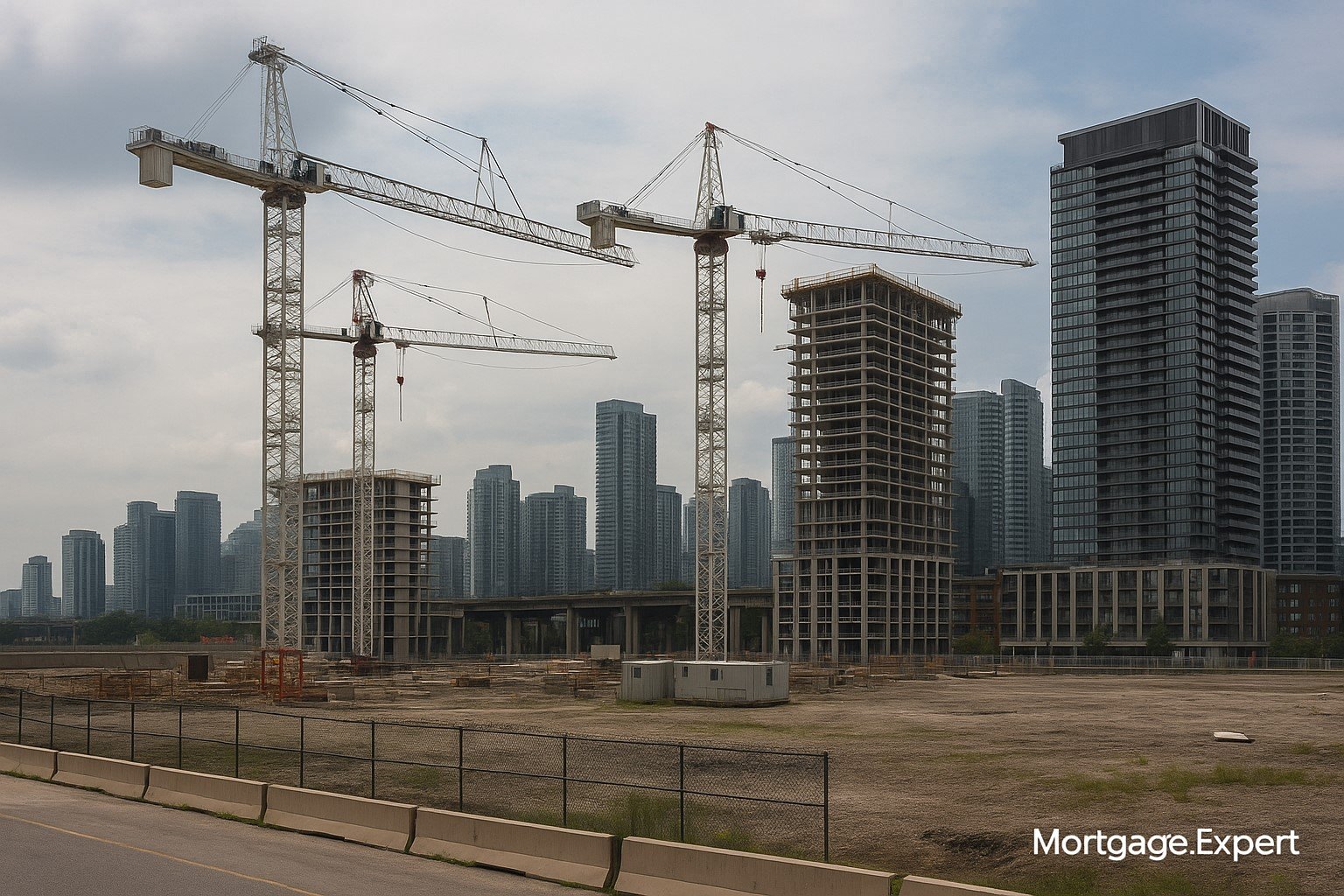

Ontario’s Housing Market Slows Sharply as Job Losses Mount
Toronto’s unemployment has surged to nearly 10%, and housing starts are down 58% year-over-year. Ontario’s housing market is slowing sharply, creating risks and opportunities for buyers and homeowners.
Ontario’s Housing Machine Hits the Brakes
Ontario’s once-booming housing sector has come to a screeching halt. New data shows housing construction, affordability, and demand all declining sharply in 2025. According to recent reports, Toronto’s unemployment rate has climbed to nearly 10%, while residential housing starts have fallen dramatically—down 58% year-over-year in Toronto, and 29% across the rest of the Greater Toronto Area (GTA).
For a province that has been the engine of Canada’s housing growth for the past decade, the slowdown is striking.
Unemployment Weighs on Housing
The rise in Toronto’s unemployment rate is perhaps the biggest drag on the housing sector. More than 250,000 jobs have been lost across the city since late 2024, heavily concentrated in construction, finance, and tech. These sectors are closely tied to real estate, meaning the ripple effects are hitting both buyers and developers.
- Developers are cautious, shelving new projects due to weaker demand and tighter financing conditions.
- Buyers are hesitant, uncertain about job security and wary of taking on large mortgage commitments.
- Rental markets are shifting, with more households delaying purchases and remaining tenants longer, creating mixed pressure on rents.
Construction Starts Collapse
The numbers tell the story:
- Toronto housing starts: Down 58% year-over-year.
- Rest of the GTA: Down 29% compared to last year.
- Ontario overall: Starts have hit their lowest level since 2013.
Developers cite higher borrowing costs, stricter lending rules, and weaker pre-sale demand as reasons for cancelling or postponing projects. Some major condo towers planned for downtown Toronto have been paused indefinitely, while suburban single-family projects are being delayed until the market stabilizes.
Mortgage Market Impact
The housing slowdown has important consequences for Ontario borrowers and the mortgage industry.
- Easier Prices, Tighter Supply
While weaker demand is cooling price growth, the drop in new construction could limit future supply. This creates a paradox: affordability improves slightly for some buyers today, but longer-term, reduced supply risks driving prices higher again once demand rebounds. - Stress at Renewal
Many Ontario homeowners are heading into mortgage renewals in 2025–26. Even as home price appreciation slows, they still face payment jumps of 15–20% compared to their original ultra-low rates. Lenders, including the Big Five banks, are preparing for more refinancing requests and amortization extensions. - Shift in Buyer Preferences
With downtown Toronto prices staying high relative to incomes, more buyers are looking to secondary cities like Hamilton, Kitchener-Waterloo, and London. These areas still offer comparatively lower prices and better job prospects.
Broader Economic Factors
Ontario’s housing market isn’t struggling in isolation—several national and global factors are contributing:
- High Interest Rates: The Bank of Canada’s overnight rate remains at 2.75%, holding borrowing costs elevated. While stable, rates are significantly higher than during the 2020–21 boom.
- Slower Immigration Growth: Net immigration slowed in 2025 after a record surge in 2022–23. Fewer newcomers means less demand pressure on rentals and entry-level housing.
- Construction Costs: Material and labor costs remain high, discouraging developers from launching projects even when land is available.
What It Means for Homebuyers
For prospective buyers in Ontario, the slowdown offers both risks and opportunities:
- Opportunities: Prices in some suburban and smaller markets are flattening or even declining slightly, creating openings for first-time buyers who were previously priced out.
- Risks: With unemployment rising, buyers must be cautious about job stability before committing to large mortgages. Lenders are scrutinizing applications more closely, especially in Toronto.
- Timing Matters: Those who can wait may see further softening in condo prices, particularly in investor-heavy downtown markets.
What It Means for Homeowners
For existing homeowners, particularly those with renewals approaching, the slowdown creates a delicate balancing act:
- Equity Questions: Some homeowners who bought at peak prices in 2021–22 may find their equity shrinking, limiting refinancing options.
- Higher Payments: Renewal shock remains the biggest stress point, with payments jumping even as home values plateau.
- Flexibility Options: Lenders are offering amortization extensions (30–35 years) to help borrowers manage cash flow. National Bank, RBC, and Scotiabank have all confirmed these options remain on the table.
Regional Comparison
Ontario’s slowdown stands in contrast to other parts of the country:
- Quebec: Steadier growth, with Montreal avoiding sharp job losses and housing starts holding relatively firm.
- Alberta: Supported by energy markets, Calgary and Edmonton continue to see stable demand.
- British Columbia: Also facing slowdown, though not as steep as Ontario’s, with Vancouver housing starts down ~20%.
This divergence suggests that Ontario’s downturn is more severe and localized, tied closely to its employment trends and reliance on high-rise condo construction.
Analysts’ Outlook
Economists expect Ontario’s housing market to remain subdued through 2026 unless job growth rebounds significantly. Some key forecasts:
- Short-Term (2025–26): Flat-to-declining prices in Toronto condos, modest growth in secondary cities.
- Medium-Term (2027–28): Supply shortages may re-emerge if construction remains depressed, reigniting affordability concerns.
- Policy Response: Pressure is mounting on both provincial and federal governments to boost affordable housing construction, but developers argue that financing and cost hurdles remain the real barrier.
Ontario’s housing machine, once unstoppable, is now grinding to a halt. Rising unemployment, a collapse in construction starts, and mortgage renewal stress are creating challenges for buyers, homeowners, and developers alike.
For borrowers, the key message is caution: budget conservatively, plan for higher payments at renewal, and consider smaller markets if affordability is a priority. For policymakers, the focus must shift to stabilizing employment and creating conditions for sustainable housing supply.
✦ Mortgage.Expert Insight: Renewal shocks and affordability challenges require early planning. Don’t wait until your renewal notice arrives—Talk to a Mortgage Expert →

Clara Desai
Articles: 545Related Posts



Stuck with a Mortgage Decision?
Don’t stress — our team is here to help. Reach out for free, no-obligation guidance.
Contact the Experts